Declaring a PEP
-
01.
-
02.
-
03.
-
04.
Performing an LCA (Life-Cycle Assessment)
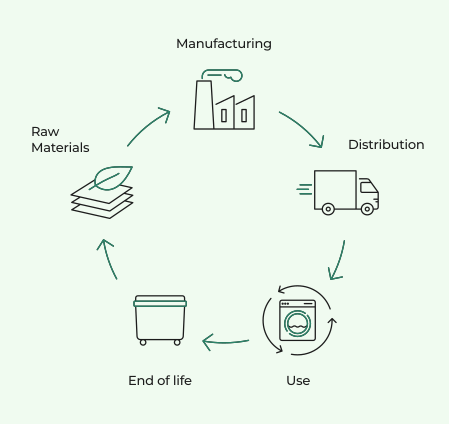
Any environmental declaration (EPD) in the form of a PEP (Product Environmental Profile) is based on performing a multi-criteria Life-Cycle Assessment (LCA), in accordance with the requirements applicable to Type III environmental declarations.
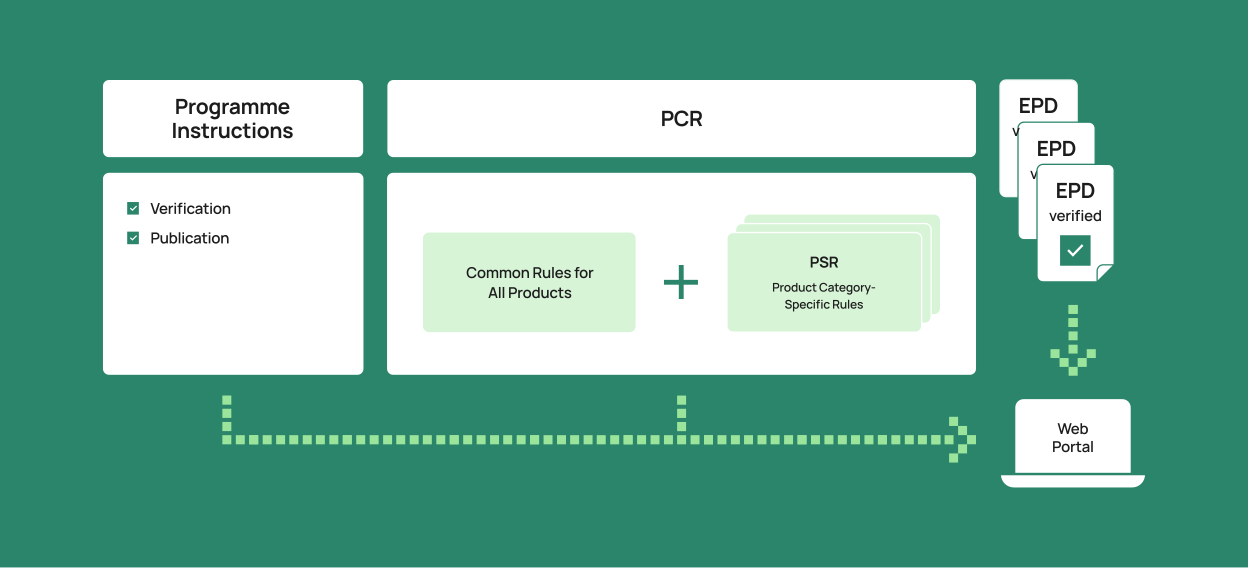
The Product Category Rules (PCRs) set out the common methodological framework applicable to performing LCAs on electrical, electronic and HVAC products and equipment. They come with FAQs to facilitate work in certain specific cases.
PCRs are supplemented by Product Specific Rules (PSR) tailored to the specific technical features of each product category.
Specific Rules PSR
Drafting a PEP
The PEP always comes with a declaration of compliance and a verification report. The PEP is a standardised document which must be drawn up in accordance with specific editorial rules and be in compliance with ISO 14025. Each PEP is given a unique standardised registration number, which is noted on every page of the document, alongside the PEP Ecopassport® logo. This number guarantees PEP traceability during the whole of its period of validity and in all the databases in which it is referenced.
The report must give full and transparent details of the following:
- the scope of the study,
- the selected functional unit,
- the system boundaries,
- the life-cycle steps covered,
- the environmental indicators expressed in their reference units.
The PCR applied and the data sources used must be explicitly stated and the period of validity must comply with the programme rules.

The three documents must be rigorously consistent with each other, with the same identity numbers, the same publication date, the same verifier and the same product designation. The verification report must clearly state its conclusion and, when applicable, the conditions to be fulfilled.
A PEP is a factual document and not a marketing tool. In accordance with ISO 14021 and the European Green Claims directive, any environmental claim must be precise, verifiable and proportionate. Unjustified generic terms such “ecological”, “sustainable” and “environmentally friendly” and any comparisons which do not specify the reference base (such as “X% less CO2” without the scope or the methodology) must not be used.
To sum up, PEP quality is based on three requirements:
- Compliant identification and editorial structure,
- Scrupulous consistency between the PEP, the declaration of compliance and the verification report,
- Uncompromising rigour in the formulation of environmental claims.
Architecture of the technical documents to be used:
Having a PEP verified

For it to be registered in the PEP Ecopassport® ISO 14025 programme, the PEP must undergo independent verification to certify its compliance with the requirements set out in the Programme reference documents, namely
- The PEP drafting rules (PCR)
- The editorial rules.
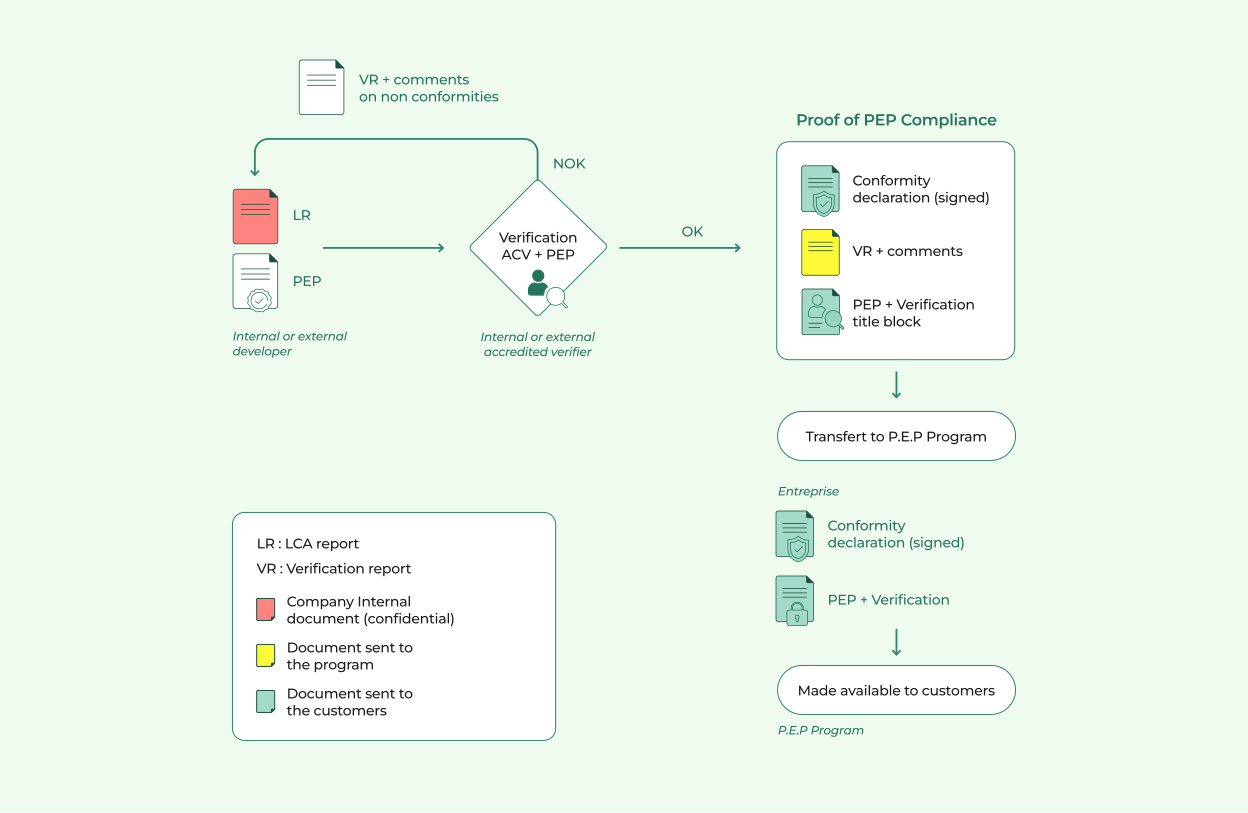
This verification can only be carried out by a verifier accredited by the Programme, who is independent of the PEP publication process. Verification is followed by the publication of two documents confirming the PEP’s compliance.
- The declaration of compliance, signed by the attested independent verifier
- The verification report.
A PEP Ecopassport® compliant with the PEP Ecopassport® Programme can easily be identified through the verification logo found on every page of the PEP.
See also
Verification procedure and the flow of related documents:
Registering a PEP Ecopassport®

To claim compliance with the PEP Ecopassport® programme, a PEP-type Environmental Product Declaration (EPD) must first be registered with the PEP Ecopassport® programme.
The PEP Ecopassport platform is the only way of managing your PEP Ecopassport®. It can be used for registering your company, declaring the PEP Ecopassport® documents and managing all your declarations.
The company must pay an account creation fee and a registration fee, the amount of which depends on whether the company is a member of PEP Ecopassport® programme. Upon registration, an invoice is sent to the applicant and the PEP is given a unique registration number under the PEP Ecopassport® programme.